




Summary: There’s something the cable companies have been counting on you to forget, and it’s costing you almost $2,000 a year. What I discovered brought my TV bill down to $0. If you’re over 40, you lived through something most people under 30 don’t even know existed: free television. We willingly started paying monthly fees for something that used to be free. But here’s what nobody tells you: The original system never went away. By federal law (the same law that’s been in place since the 1950s), every major network is still required to broadcast their programming for free over the airwaves. I’m not the type to just buy something because someone told me to. So, I started researching. I ordered WaveMax on a Sunday. It showed up Wednesday afternoon. ▪︎ One cable, ▪︎ A power adapter. I unplugged my old cable box, connected the WaveMax where the cable box used to go, and ran a channel scan on my TV. The kind of scan you’d run if you were setting up a new TV. Three minutes later, my TV showed 100+ available channels. Here’s what’s on our TV now, completely free: When I told my neighbor Dave about this, his first response was: “That can’t be legal.” Dave asked me the same question I asked myself: “If this is real, why doesn’t everyone do it?” I bought the three-pack of WaveMax antennas for $89.85. That’s about $30 each. One went on the living room TV, one on the bedroom TV, and I gave one to my daughter for her apartment. If you can plug in a lamp, you can set up the WaveMax. Unplugged the cable box from my TV. Found the round connector on the back of the TV labeled “Cable In” or “Antenna” — the same place the cable box was plugged in. Plugged in the WaveMax cable. Plugged the power adapter into the wall. Turned on the TV, went to Settings, selected “Channel Scan”. Waited two minutes while the TV found all 100+ channels. That’s it. No wifi passwords. No apps. No creating accounts. Just plug it in and scan for channels. This was my biggest worry before I ordered. What if I’m too far from the broadcast towers? What if I only get five channels? When I bought the WaveMax, it was 75% off. The regular price is $242 for three antennas, but I paid $89.85. Even at full price ($39.95 for one antenna), it pays for itself in less than a month compared to cable. But if the sale is still going, you might as well take advantage of it. Order the WaveMax directly from their website. The three-pack is $89.85 (75% off) if the sale is still active. Single antennas are $39.95. Update May 8, 2025 * – A few weeks after I cancelled my cable, I started seeing WaveMax mentioned in news articles and on social media. Apparently, a lot of people are figuring this out at the same time I did. The company is offering a 75% first-time buyer discount right now — probably to keep up with demand and get more reviews while this is getting attention. If you’ve been thinking about trying it, now’s the time.
For years, I’ve been paying $97 a month for cable TV. Turns out, I didn’t need to. And neither do you.
Last month, I sat down with my wife and added up all our total monthly expenses for television. Cable, Netflix, Amazon Prime. We were spending $156 every single month just to watch TV.
I sat there staring at that number. $156.
My parents never paid for television. They had an antenna on the roof. We watched ABC, NBC, CBS, PBS — all completely free. No bills. No subscriptions. No monthly fees.
When did that change? Or did it?
Did the cable companies just… make us forget that TV used to be free?
That question wouldn’t leave me alone. Then I remembered something my brother-in-law Bob said at Sunday dinner a few weeks back.
Bob is one of those guys who’s always going on about something. Conspiracy theories, government coverups, you name it. I usually tune him out.
But this time, he was talking about how he cancelled his cable and hadn’t paid for TV since. “It’s all free,” he kept saying. “It’s been free the whole time.”
I thought he was full of it. But I couldn’t stop thinking about those antennas from when I was a kid.How Cable Companies Convinced An Entire Generation To Pay For Something That’s Still Free
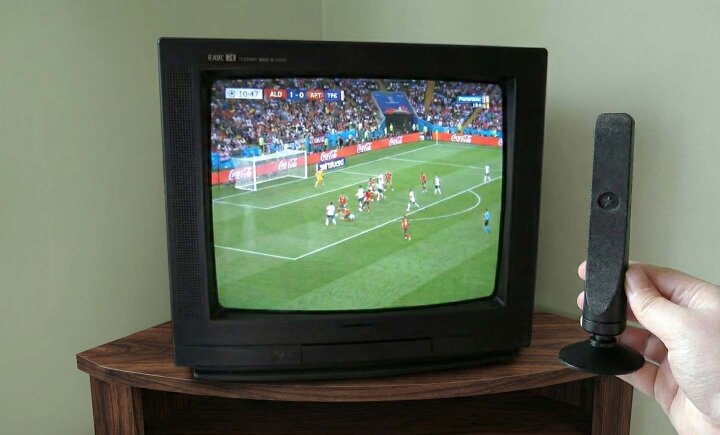
From the 1950s through the early 2000s, TV didn’t cost anything. You bought a television set, plugged it in, and watched whatever was on.
Broadcasters made their money from commercials, the same way radio did. The content was free to anyone with a TV and an antenna.
Then cable came along in the 1980s and 90s. They sold us on “premium content” — more channels, better reception, specialty programming.
And we bought it. Literally!
Then streaming showed up in the 2010s. Netflix, Hulu, Disney+, HBO Max. More subscriptions. More monthly charges. More companies with their hands in our wallets.Every Major Network Is Still Required to Broadcast for Free
ABC, NBC, CBS, FOX, PBS — they’re all still transmitting right now. Free. Legal. Available to anyone with an antenna.
After that cable bill hit $97, I couldn’t get Bob’s comment out of my head. So I called him.
“You really watch TV for free?” I asked. “How?”
“Same way your dad did,” he said. “But… better?”
Bob told me he ordered something called WaveMax online. “It’s just a better antenna,” he said. “Forty bucks, one time. That’s it. I’ve been watching free TV for a year.”
Forty dollars versus $97 a month. Even if Bob was half-crazy, the math was worth checking out.The More I Researched, The Angrier I Got At Myself For Not Knowing This Sooner
Turns out, Bob wasn’t making this up. Over-the-air TV broadcasting never stopped. The FCC still requires it.
The only thing you need is an antenna strong enough to pick up the signal.
The problem is most people try their TV’s built-in antenna, get terrible reception, and assume free TV doesn’t work anymore. What they don’t realize is that the built-in antenna isn’t designed to work well.
It’s designed to fail so you’ll pay for cable instead.
But a proper antenna — one designed to actually pick up broadcast signals from 50+ miles away — changes everything.
I found hundreds of reviews from people who’d cancelled cable and gone back to antenna TV. People in their 30s and 50s, like me.
The more I read, the angrier I got. Not at Bob. At myself, for paying $97 a month for something that was available for free.The Three-Minute Setup That Killed My Cable Bill
I was expecting some complicated mess of wires and instructions that would take all afternoon.
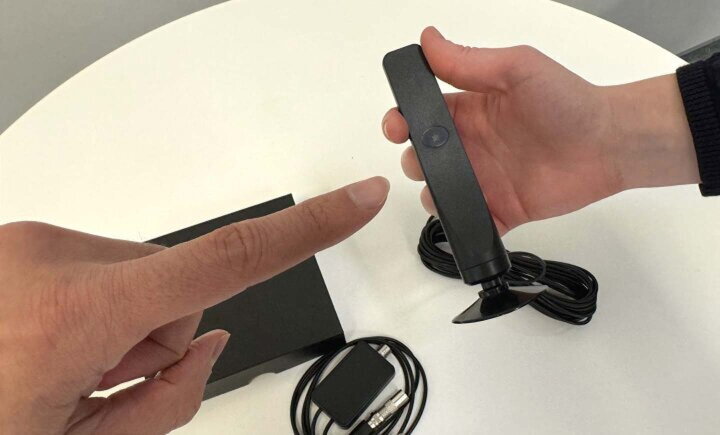
Instead, I opened the box and found three things:
▪︎ A small black antenna about the size of a TV remote,
The instructions had three steps.
Hundreds of channels. Free. Forever!
I called my wife from the kitchen. “Look at this,” I said, flipping through the channels. Local news. ABC. NBC. CBS. FOX. PBS. MeTV with old westerns. Sports channels. Weather. All in perfect HD.
“How much is this costing us?” she asked.
“Nothing,” I said. “Forty dollars one time. That’s it. No monthly bill.”
She didn’t believe me until I showed her the website. No subscription. No contract. No monthly fees. Just an antenna that picks up the same free broadcast signals that have been there since the 1950s.What We’re Actually Getting (And What We’re Not Missing)
All the major networks — ABC, NBC, CBS, FOX, PBS Local news every morning Sunday football (the only sports I actually watched on cable) Classic TV channels like MeTV (Columbo, The Andy Griffith Show, Westerns) Movie channels Weather Dozens of channels I’d never heard of but have better content than half the stuff on subscriptions.
The picture quality is actually sharper than cable was. I looked this up — broadcast TV is uncompressed HD.
Cable compresses the signal to save bandwidth, which is why it sometimes looks fuzzy. With the antenna, you’re getting the full signal the way it was meant to be seen.The Question Everyone Asks Me
It is. Completely legal.
You’re not hacking anything. You’re not stealing signals. You’re receiving broadcast television — the same free public broadcasts that have been transmitted since the 1940s.
The FCC requires networks to send these signals. Just a reminder – that’s how TV worked for 50+ years before cable!
The WaveMax is just a more powerful antenna. A better one than the useless thing built into your TV, but that’s all it is.
I even called my cable company before I cancelled, just to make sure there wouldn’t be issues.
The representative got very quiet when I mentioned switching to an antenna. Then, she just tried to talk me into keeping cable for “the convenience.”
Pfff. The convenience of paying $97 a month for something I can get for free?
No thanks.Why Don’t More People Know About This?
The answer is simple: there’s no money in telling you.
Cable companies spend $8 billion a year on advertising. Streaming services spend billions more. They’ve built an entire industry around convincing people that TV costs money every month.
But they can’t change federal law. And federal law says broadcast TV is free.
The only reason I found out is because Bob wouldn’t shut up about it, and I finally got annoyed enough to look into it myself.
Now I’m the one telling everyone I meet, not because I’m selling anything, but because I’m saving $1,872 a year and I think other people should know.What It’s Actually Costing Me (And Saving Me)
My cable bill was $97 a month. The WaveMax paid for itself in the first month.
I was also paying $39 for Netflix and $20 for Amazon Prime Video. I kept Amazon for the shipping, but I don’t use the video anymore. That’s another $59 a month saved.
Total: $156 per month. $1,872 per year. Over five years, that’s $9,360 staying in my pocket instead of going to Comcast and Netflix.
And here’s the thing that really gets me — I’m watching more TV now than before. Not because there’s more content, but because I’m not wasting time scrolling through endless menus looking for something worth watching.
I just turn on the TV and watch something. Just like in the good old days.
I don’t even need the internet for this to work. WaveMax picks up broadcast signals from the air, the same way FM radio works.The Setup
Once again, here’s what I did:What If It Doesn’t Work Where I Live?

The WaveMax picks up signals from 120+ miles away. If you live in or near a city, you’ll get plenty of channels. Even in rural areas, most people get at least 20-30 channels.
Plus, the company offers a 30-day money-back guarantee. If you order it, set it up, and aren’t getting enough channels, you can return it for a full refund.
I was ready to return mine if it didn’t work.Why The Price Is Low Right Now
My son-in-law works in marketing. He explained that newer companies do this to get reviews. They offer a big discount, get people to try the product, and rely on word-of-mouth after that.
It’s working. I’m telling you about it now.
I don’t know how long the discount will last. It was still running when I checked last week, but these promotions usually end once they hit their review goal.How To Get Started
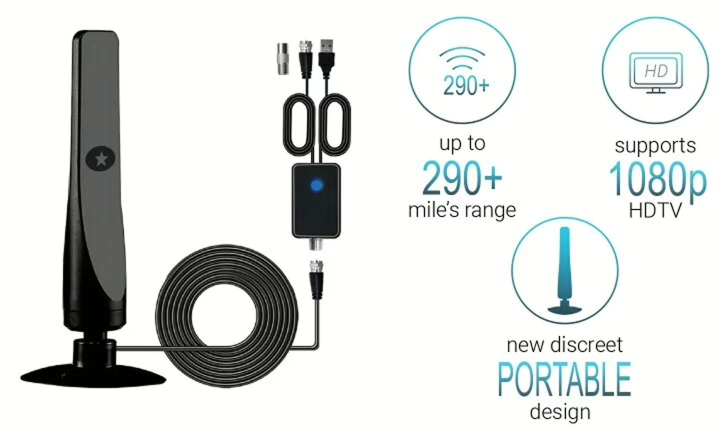
Plug it in and run a channel scan on your TV. It takes about five minutes, even if you’re not tech-savvy.
Watch free TV.
I cancelled my cable on October 3rd. Haven’t missed it once. My wife was nervous we’d be giving up too much. Now she’s the one telling her sister and her book club friends about it.
The cable companies convinced us we needed them. Turns out, we don’t.
Customer Ratings
Average based on 9.803 reviews
 Excellent


